Pickleball Drop Serve: A Beginner's Rules Checklist
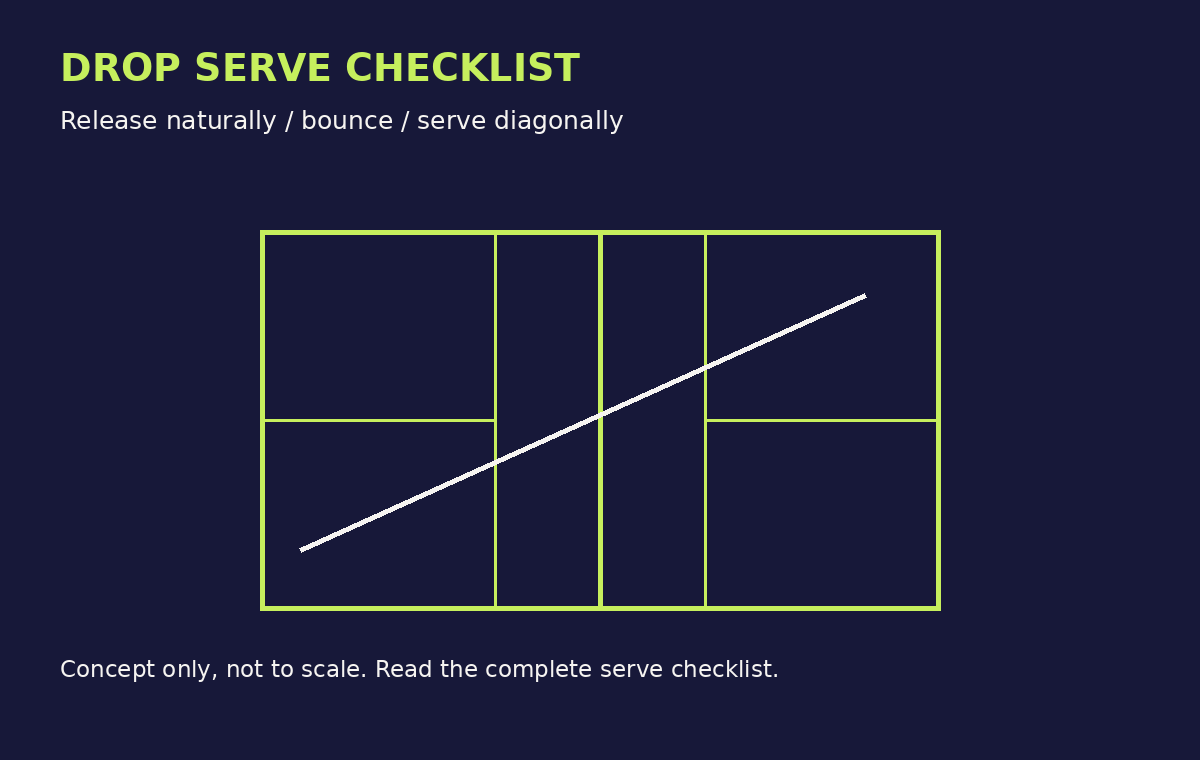
A drop serve starts with a bounce before the paddle hits the ball. It can be a useful technique to practice, but it still has rules. This guide summarizes USA Pickleball's 2026 rules 7.A-7.E and separates a drop serve from a volley serve.
How must you release the ball?
Release the ball from a natural, unaided height. Do not throw it down, toss it up or otherwise propel it before serving. The rules allow release using one hand or the paddle, with no deliberate added spin or manipulation on release. The release must be visible to the receiver.
How many bounces are allowed before you hit?
For the drop serve, the 2026 rulebook sets no restriction on how many times the ball bounces before contact or where it bounces on the playing surface. That does not remove the server-position rules. Keep the motion simple while learning, rather than treating extra bounces as a way around another rule.
Where must your feet and the ball go?
At contact, at least one foot must touch the correct serving area. Neither foot may touch the court or the playing surface outside that correct serving area. Serve into the diagonally opposite service court, clearing the non-volley zone. A serve landing on the non-volley-zone line is out.
Is the volley-serve motion rule the same?
No. The rulebook lists upward arc, paddle-head and ball-height requirements under the volley serve. Drop-serve rules have their own release conditions. Do not mix the two methods into one checklist. In organized play, use the current event's governing rules and ask an official about an unclear call.
Frequently asked questions
Can I force the ball downward to get a higher bounce?
No. The drop-serve release must not propel the ball.
Does a drop serve remove foot-fault rules?
No. Server positioning still applies.
Run a release-only practice check before a full serve
Separate the release from the swing while learning. Stand in the correct serving area and let the ball go from a natural, unaided height. Watch the bounce without hitting it. The aim is to recognise a release that does not throw the ball down, toss it up or deliberately add spin. This is a practice exercise, not a different rule.
- Have a practice partner watch whether the release is visible. Do not hide it behind your body.
- Repeat the same simple release before adding a paddle swing. Avoid forcing the ball downward to manufacture a higher bounce.
- Add the hit and check your feet at contact. At least one foot must be grounded in the correct serving area, and the other positioning restrictions still apply.
- Check the landing target separately: the diagonally opposite service court, beyond the non-volley zone. A serve on the non-volley-zone line is out.
Judge the release and the contact as separate questions
A correct release does not excuse a foot fault. A ball landing in the correct service court does not prove the release was legal. Use both checks rather than deciding that a successful-looking serve must satisfy every rule.
For example, a player can let the ball bounce naturally but step onto the court before contact. That example illustrates why a drop serve is not an exemption from positioning requirements. Conversely, keeping the feet back does not allow the player to propel the ball down on release.
The drop-serve rules do not impose the volley serve's same motion checklist. Read the relevant method in the current rulebook, not a blended list remembered from a video. For an event, follow its governing rules and ask an official about a disputed interpretation rather than using this beginner practice drill as an officiating decision.
Related guides
- Pickleball Two-Bounce Rule: The First Three Shots
- Pickleball Kitchen Rules: Lines, Bounces and Momentum
- Pickleball Court Size, Equipment and Where to Play: A Beginner's Guide (2026)
Sources
Last verified: October 28, 2026.


Comments
Post a Comment